Popcorn Basics
Why Popcorn Pops: A Look Inside the Kernel
A popcorn kernel carries the water that helps it pop. Heat builds pressure inside the hull, then the expanding starch becomes the familiar airy snack.
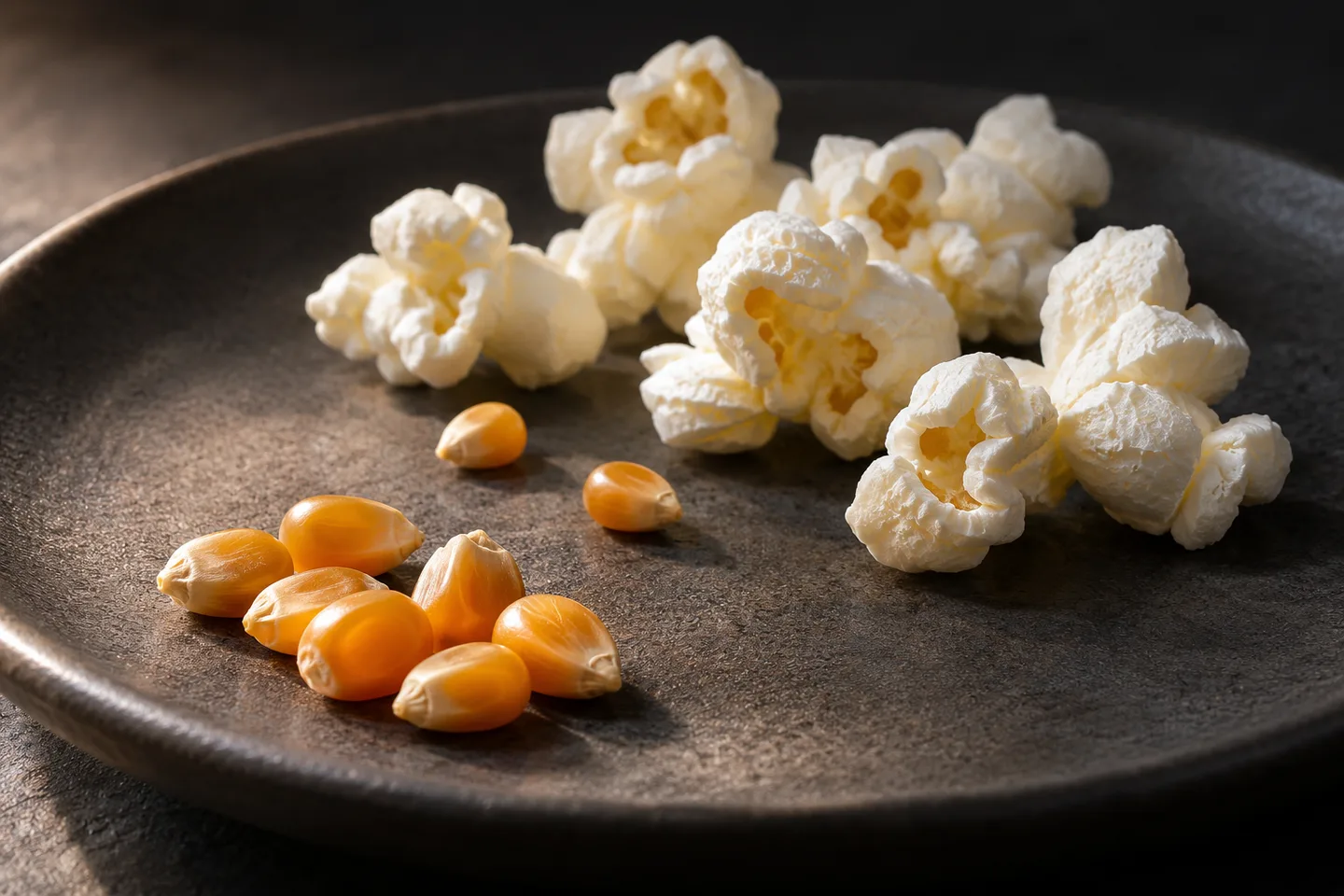
A hard kernel contains more than you can see
A popcorn kernel contains water and starch inside a tough outer covering called the hull. As the kernel heats, water turns to steam and pressure builds. The hull eventually breaks, and the softened starch expands into the airy piece we recognize as popcorn.
The water was inside the kernel before cooking began. That explains why pouring dry-looking kernels into a popper can produce a cloud of steam. The Popcorn Board describes the process here: https://www.popcorn.org/All-About-Popcorn/What-Makes-Popcorn-Pop.
A useful way to follow the change is to separate three jobs: the hull contains the kernel, water helps create pressure, and starch forms much of the expanded snack. Oil and seasonings can affect the finished food, but they do not explain the kernel's change on their own.
The pop marks the sudden change
While a kernel heats, you may see little happening on the outside. Then it opens in a moment. The sudden release of pressure allows the starch to expand; as it cools, it holds its new shape. The familiar sound belongs to that quick event, rather than to a slow swelling you can watch from start to finish.
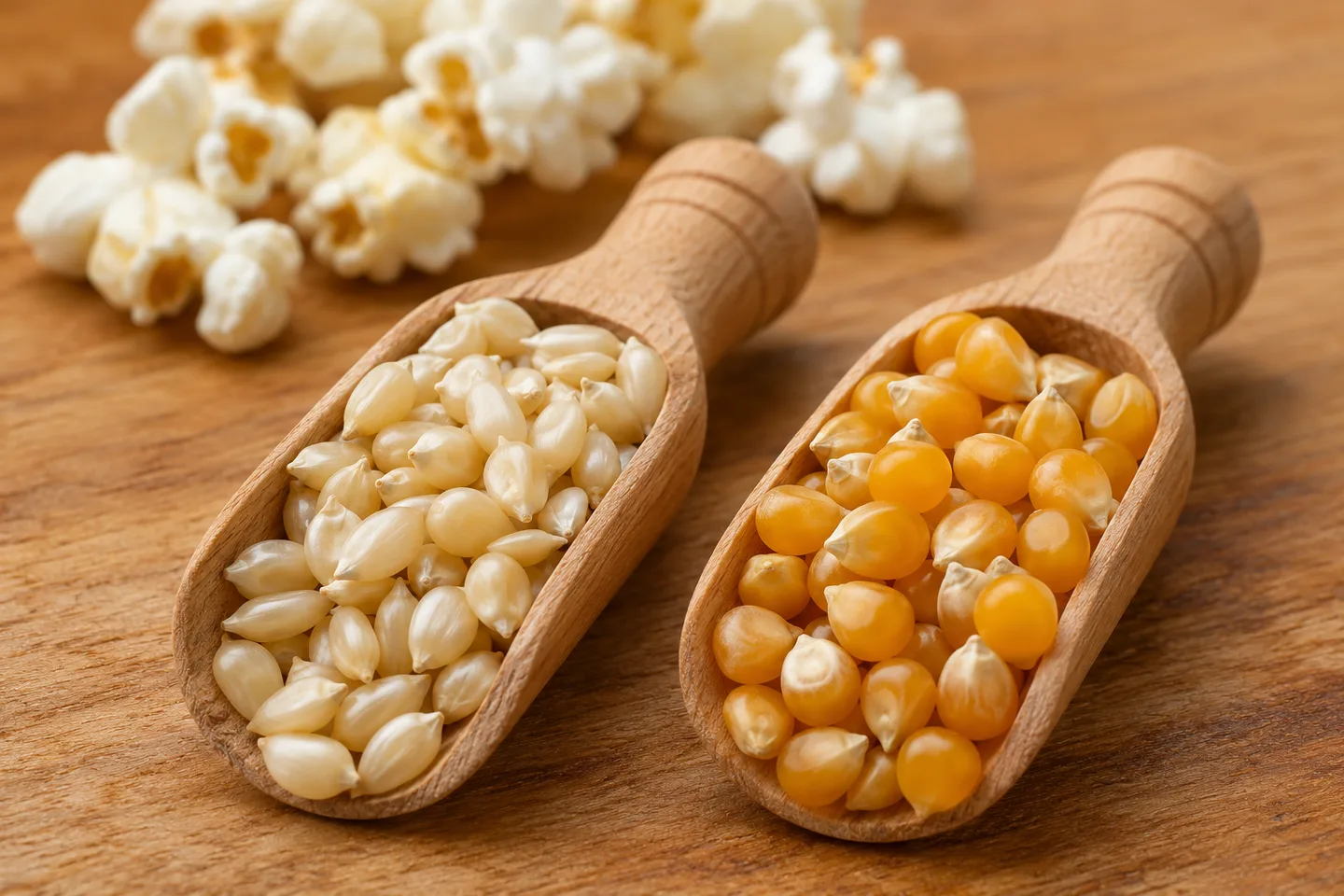
For a short explanation at the table, point to one raw kernel and one popped piece. Ask someone to describe the change in their own words. Then use the source diagram to check the parts they mentioned.
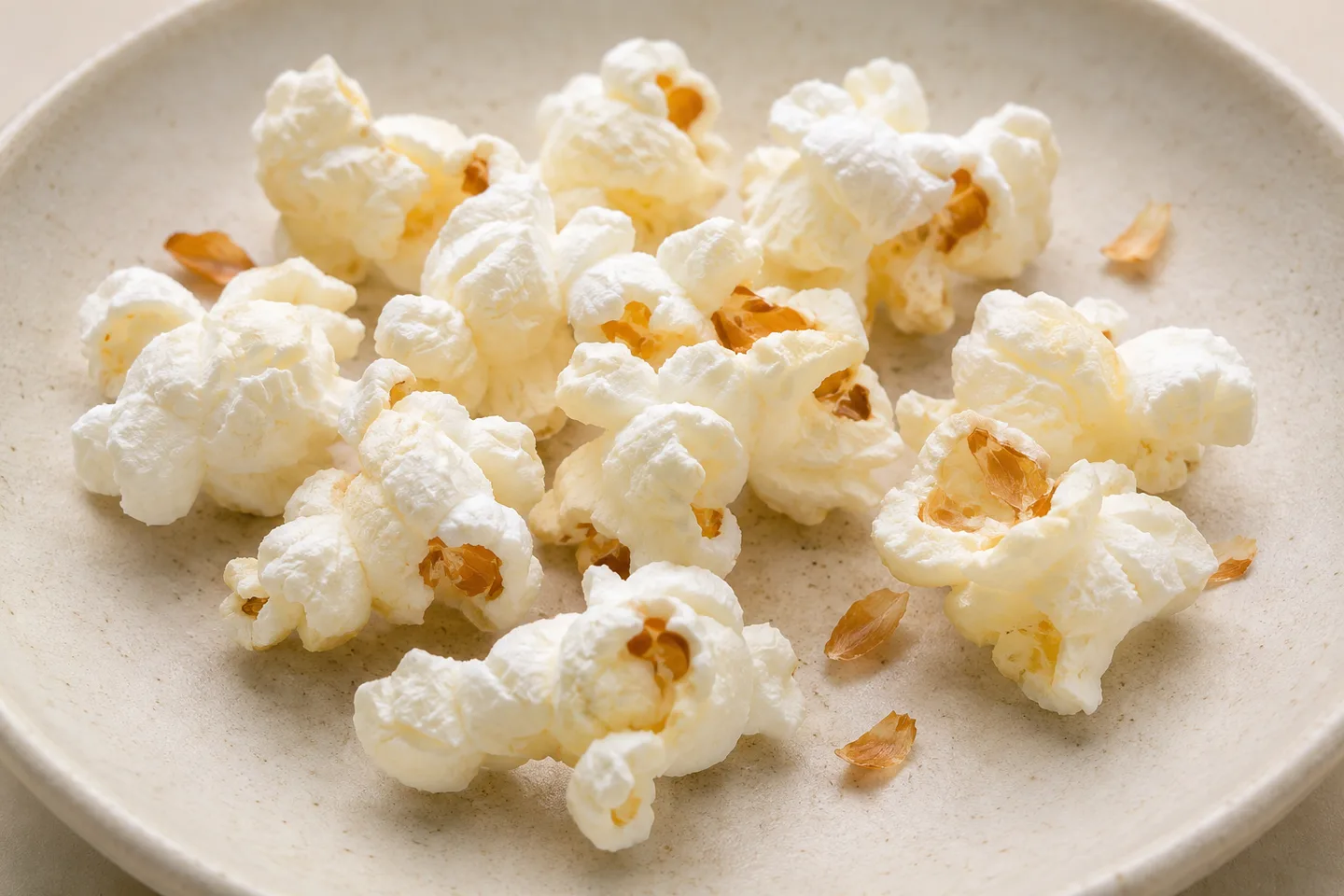
You can spot remnants of the brown hull on a cooled piece of popcorn. The pale expanded portion and those darker fragments once occupied a much smaller space together.
Try a before-and-after observation
Set aside a few raw popcorn kernels on a plate before preparing a separate batch according to the product and equipment instructions. Let the finished popcorn cool. Place a few popped pieces beside the raw sample and compare their outlines, surfaces, and the space they occupy.
Use the same number in each group if you want a fair visual comparison. For example, ten raw kernels beside ten popped pieces make the size change easy to see. This is an observation idea, not a measured expansion claim. Different pieces and different batches need not fill the same volume.
Take a photograph from above or sketch the two groups. Write down what you can see before adding an explanation. Raw kernels are observation materials here; do not include them in the snack bowl.
Keep the kitchen demonstration simple
Use plain popping corn and a method approved for your equipment. An adult should handle heating and hot containers. Keep your face and hands away from escaping steam when opening the container, and follow its directions instead of removing a lid to get a closer look.
You can complete the comparison with cooled popcorn. There is no need to catch a kernel mid-pop, cut a hot kernel open, or improvise a sealed pressure experiment. Photos of the raw and finished food give you plenty to discuss.
For a group, prepare the popcorn before inviting people to the observation table. Keep the cooking area separate from the plates and drawing materials.
Add the flavor question afterward
Once you understand the change in the kernel, compare plain popcorn with a finished flavored snack. Notice what the maker added around the popped piece: perhaps a light sweet coating, salt, or another seasoning. Ask which changes came from popping and which came from the recipe.
Kettle corn is one finished style within that larger story. Our introduction explains its sweet-and-salty character: https://pnwkettlecorn.com/blog/what-is-kettle-corn/. For questions about a specific bag's ingredients or preparation, use its label and the seller's answer rather than inferring a recipe from the appearance.
A little sweet. A little salty.
Always worth sharing.
Find your next handful.
Explore the current flavors and see what’s popping around the Northwest.